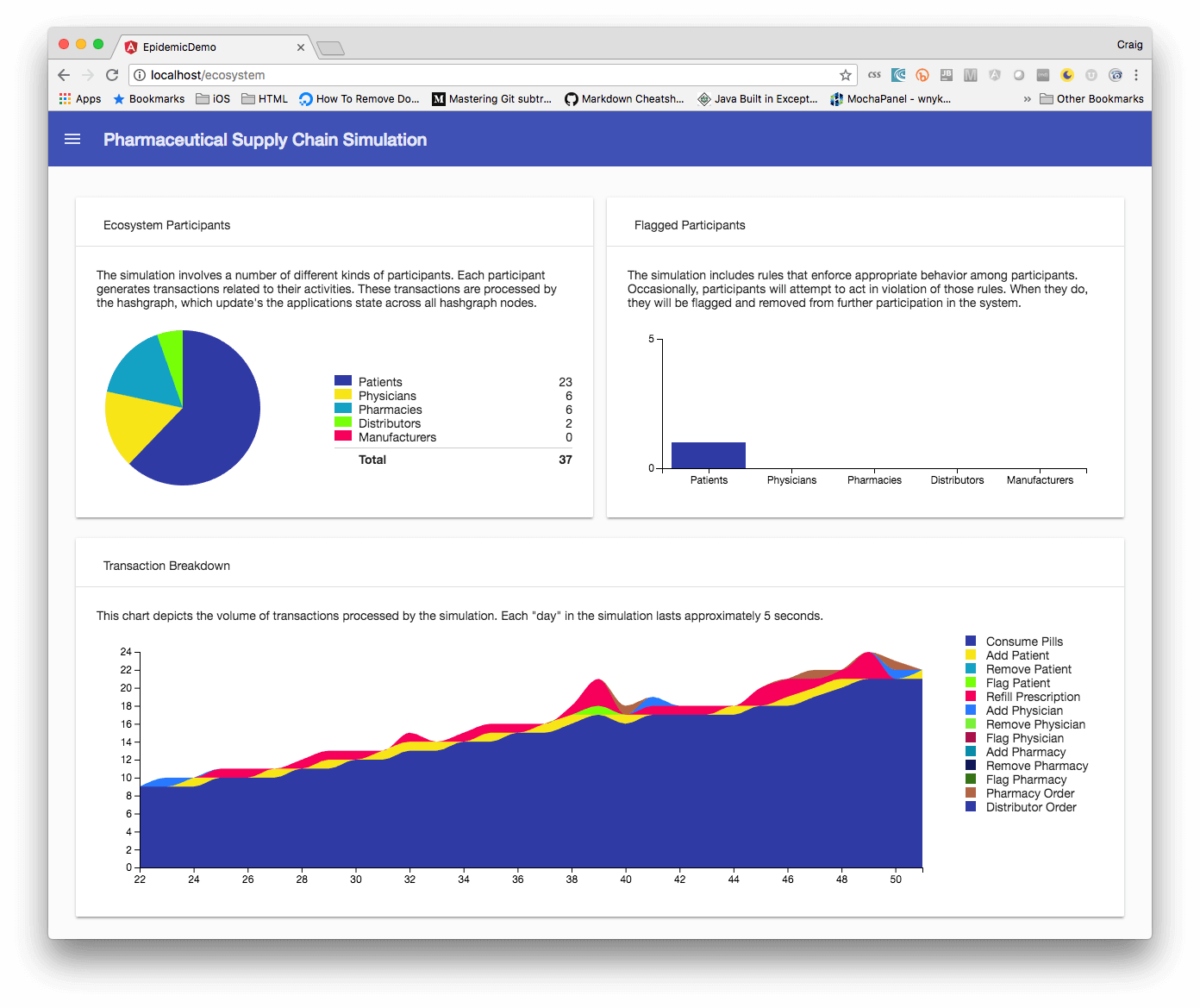
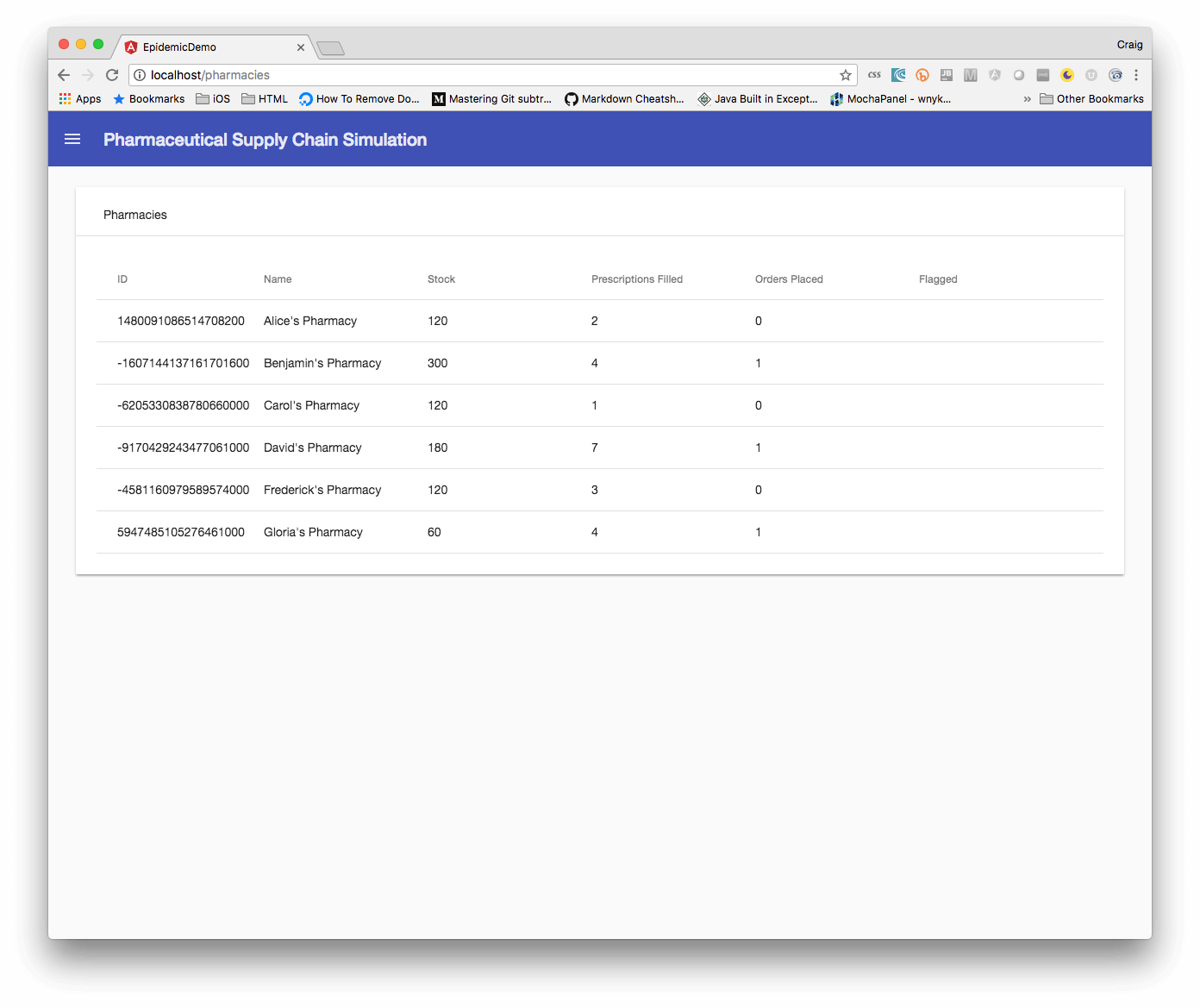
Pharmaceutical Supply Chain Track and Trace Proof-of-Concept

Industry: Medical Prescription Manufacturing, Shipping and Logistics

Overview: Utilize Blockchain to create a trusted, immutable record for tracking shipments of highly regulated substances such as opioids.

Challenge: Tracking shipments of highly regulated products is often cumbersome with many parties involved in manual processes which opens the process up to a high potential for inaccuracy or fraud.

Solutions: Utilize a distributed ledger, on a Swirlds Hashgraph network to more accurately track shipments of highly regulated substances.

Technologies: Swirlds Hashgraph


Summary:

Within the pharmaceutical supply chain, regulatory compliance can place a massive burden on all parties. Many existing supply chains utilize manual processes that can drastically increase the possibility of manual errors and the potential for fraud. Since the introduction of Blockchain and Distributed Ledger Technology, Shipping, Logistics, and Supply Chain tracking have become one of the most popular use cases.

This proof of concept we were able to demonstrate that Blockchain technology is an ideal solution for tracking and compliance. Within the Pharmaceutical Supply Chain, Blockchain can be used to create more transparency throughout the process, in addition to an immutable record to ensure safety requirements and regulations are being met and are in compliance. It was built as a demonstration for applying Swirlds Hashgraph technology to the regulated supply chain space.

UX Examples of Reports from Solution

DLT Solution for Medical Credentialing Tracking

Industry: Healthcare

Overview: The Customer wanted to integrate DLT into their existing medical credentials management platform in order to enhance trust in the information and reduce the amount of time required to verify credentials.

Challenge: Verifying medical credentialing is a very lengthy process in a highly regulated industry. In most cases the process can take weeks or even months to verify credentials, and many times has to be redone for verification purposes in each instance, such as medical professionals taking on other work-as is common in the field.

Solutions: Using the customer’s existing Salesforce application, TxMQ connected it to a distributed ledger network via REST API. The system includes an innovative mechanism for storing credential documents securely, with high availability.

Technologies: Salesforce, Swirlds Hashgraph, Java 8, CouchDB


Summary:

A Healthcare Practice Management organization wanted to add distributed ledger technology to their existing credential management platform. The client was looking for a way to shorten the lengthy credential verification process by enhancing trust in the credentials stored on the platform, while ensuring they were stored in a secure, tamper proof environment to avoid fraud and legal issues for their organization and clients.

A DLT solution quickly became the leading technology choice to underpin the solution and deliver the desired result. The Healthcare Practice Management organization had evaluated several blockchain-based platforms and found that they didn’t quite offer the needed stability, scalability, and high availability that was needed. For that reason they chose to utilize the technology from Swirlds, which uses Hashgraph with a unique Asynchronous Byzantine Fault Tolerant consensus mechanism that is built into a private network.

Blockchain Proof of Concept for Helios Energia, a Real Estate Investment Firm

Industry: Financial Services, Real Estate

Overview: Our client was looking to build a proof-of-concept to demonstrate the tokenization of ownership of real estate, and ability to fractionalize said ownership of real property.

Challenge: Helios Energia, a Real Estate Investment Firm was exploring the idea of creating an application that demonstrated the ability to fractionalize ownership of real estate to lower the barrier of entry for investments.

Solutions: Utilize a Blockchain network to tokenize property within a portfolio so ownership can be easily verified, and fractionalized between several parties.

Technologies: Angular, Iconic, Hyperledger Fabric and Composer, Node JS, IBM Cloud Kubernetes container


Summary:

Helios Energia, a Real Estate Investment Firm approached TxMQ with an idea to fractionalize property ownership of an investment portfolio to lower the barrier of entry for potential investors. The idea is very similar to crowdfunding a product or service, but also creates an opportunity for real estate ownership for those who may not have the immediate capital or knowledge to invest on their own.

When the Helios team came to TxMQ, immediately it was identified that Blockchain would be a perfect match for their needs. This particular project required the property asset to be digitally tokenized so that ownership could be shared and verified in a secure trustless environment. The ability to tokenize assets is one of the main selling points for Blockchain adoption, and there are many new use cases that have been realized due to this unique feature.

In this case we delivered a Proof-of-Concept that conceptually showed it was possible to tokenize assets on a Blockchain which opened up the opportunity to fractionalize these assets for ownership. TxMQ delivered a Kubernetes containerized application, available on mobile UX interface for ease of management, and visibility.

Screen Shots, and UX examples for Proof of Concept:

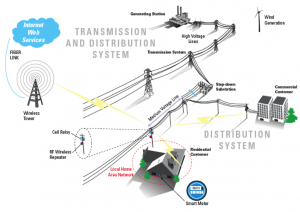
White Paper: SmartGridSB Solution Delivers Real-Time Visibility & Actionable Insight For Utilities Sector

Utilities companies have widely embraced smart meter technology, but often fail to implement networking tools and analytics to harvest actionable data from this new smart meter network.
Smart Grid Smart Business (SmartGridSB) delivers a real-time solution that empowers energy and utility companies to automate proactive, cost-saving decisions about infrastructure and operations. These automations are based on the integration of smart meter networks with analytic software solutions, which drive event correlation and decision management. The SmartGridSB solution provides visibility, insight and analytic awareness for smart grid operations. It streamlines information within the operational processes to identify patterns and analyze data that enable you to make the best response and then implement the correct action in less time.

[/et_pb_text][/et_pb_column][/et_pb_row][et_pb_row][et_pb_column type="4_4"][et_pb_text admin_label="Text - Want the %91white paper name%93?" _builder_version="3.0.98" background_layout="light"]

Want the full SmartGridSB Solutions white paper?

Fill in the form below to get it delivered right to your inbox:

[/et_pb_text][/et_pb_column][/et_pb_row][et_pb_row][et_pb_column type="1_4"][/et_pb_column][et_pb_column type="1_2"][et_pb_code admin_label="Code - HubSpot Form" _builder_version="3.0.98" background_color="rgba(86,86,91,0.08)" text_orientation="center" animation_style="fold" custom_padding="30px|20px|30px|20px" custom_css_main_element="border: solid 3px #199ad6;"]<center><!--[if lte IE 8]><!-- [et_pb_line_break_holder] --> <script charset="utf-8" type="text/javascript" src="//js.hsforms.net/forms/v2-legacy.js"></script><!-- [et_pb_line_break_holder] --> <![endif]--><!-- [et_pb_line_break_holder] --> <script charset="utf-8" type="text/javascript" src="//js.hsforms.net/forms/v2.js"></script><!-- [et_pb_line_break_holder] --><script><!-- [et_pb_line_break_holder] --> hbspt.forms.create({<!-- [et_pb_line_break_holder] --> portalId: '2682341',<!-- [et_pb_line_break_holder] --> formId: 'c950b59d-17a5-4865-a3d6-05ddc2492844'<!-- [et_pb_line_break_holder] --> });<!-- [et_pb_line_break_holder] --></script></center>[/et_pb_code][/et_pb_column][et_pb_column type="1_4"][/et_pb_column][/et_pb_row][/et_pb_section]

Whitepaper: 2014 BPM Products – Mature But Not Equal

Project Description
Business Process Management or BPM is a hot topic in 2014. With escalating costs of employee benefits, coupled with the ongoing flat or barely growing economy; finding new ways to reduce costs and personnel-effort is a primary goal for many of our customers.
BPM software has reached a level of maturity in the marketplace that encompass many options and variety of capability for customers to choose between. Gartner’s magic quadrant scatters a number of top vendor products having many similar attributes, but varying levels of integration capability and need for customization.
EXAMINING ROI
When evaluating BPM products, tailoring business requirements around adoption, and the life expectancy of the product are imperative in attaining True Cost of Ownership. In addition, an evaluation of ongoing support costs, including training, and retaining/recruiting skilled workers to support the products, must be included in any cost discussion. Building applications from scratch (do-it-yourself approach) may result in lower up-front costs, but such solutions are generally able to realize less than 75% of the functional business process requirements. All the while, they regularly fail to eliminate overhead costs associated with approximately 25% of exceptions and exception handling (those not cost-effective to automate).
Do-it-yourself approaches are likely to require reworking, or even complete rewriting – contributing to failure in meeting the business objective for cost reduction around business process automation. When businesses are starting from zero automation to 75% automation, and there’s certainty that the business process needs will not change in 5 years, the business may successfully implement a solution. However, it will likely be the cost to customize or replace the system within the same five years that will result in failure to meet ROI expectations.
Furthermore, the operational support costs and upgrades to the supporting infrastructure are rarely considered in ROI calculations – especially if memory management or performance become a problem with a new application, requiring larger hardware and software costs than initially predicted. This is an issue before the aforementioned labor costs to support non-industry standard solutions are even factored into the equation. Such costs are sure to compromise ROI, as the business experiences incremental increases in IT costs without an accompanying increase in perceived value. What is unique about BPM initiatives, is their non-functional requirements external to the business process, for functional requirements from the business. These requirements must be identified and prioritized as part of the up-front project costs and product selection criteria.
EVALUATING BPM PRODUCTS
Prior to evaluating any BPM product, BPM initiatives must have the following documentation fully prepared:
Business Requirements
Business requirements should be outlined, demonstrating a detailed process analysis with use cases representing all required functionality. The business units must prioritize use cases individually, with a plan to measure acceptance for each use case. These requirements should also include costs for the way the business operates, based on current and historical data.
Business requirements are basic to any application initiative, but BPM doesn’t stop there. Rarely are today’s businesses able to predict changes in acquisitions, mergers, compliance, business climate, or other regulatory impacts on business processes. This leads to the need for flexibility in modeling and making changes to the BPM product as a basic supposition, characterizing and differentiating BPM products from other applications that simply automate business functions.
BPM Capabilities
BPM capabilities typically include what is coined “BPEL” or business process execution language, which is used as input by BPM tools for the decisions that determine the routing or processing path within a business transaction. When automating a business process, flexibility must be kept in the forethought for ongoing change management with each business process being fully automated, keeping in line with the concept of 80% automation and 20% exception handling, which requires routing via BPM technologies. Such flexibility requires an agile business process model, for which many BPM products do not account (buyer beware). This leaves customers with the need to perform regular “rewrites” of their code, leading to costly “workarounds,” which could outweigh the initial benefits of automation if such rules are not externalized from the business modules.
BPM ESCALATION & EXCEPTION HANDLING PROCESS
Business Process Management involves channeling 80% of the work through automated mechanisms, with the left over 20% exceptions utilizing a BPM product. These remaining 20% of exceptions are then identified in terms of the business process status and escalated to humans who can act on the exception (approve it, reject it, call a customer, call a supplier, etc.). The BPM rules effectively regulate how long a pending action can stay in the system within a certain status until another escalation, notification, or exception occurs to initiate another management condition.
The process of identifying a business event, or hung transaction, automation according to accepted routing rules, and event management are part and post of the inherent BPM functions. These “standard” BPM functions are typically handled by state management inside the BPM database. Such database functionality can degrade quickly when transactions begin stacking up. It is imperative to validate the scalability of the underlying database technology. BPM databases behave differently from typical applications, since they are managing “in-flight” status information, and upon completion of the business process, the data is quickly archived and moved off the system. This requires different optimization mechanisms, which should be discussed with your DBA in light of your BPM transaction volumes.
REPORTING REQUIREMENTS
The business process automation being implemented should give heavy consideration to ongoing management and feedback to the business unit about the number of transactions processed straight through, versus exception handling, both historically (year over year) and real-time. Each business process owner will want automated reports, or possibly ad-hoc reporting capabilities, to know exact measurements and statistics about each process, likely down to specific characteristics of each transaction.
The best BPM solutions will provide mechanisms that allow for a variety of reporting capabilities, but should make reporting available through standard database queries, or by exporting data to a data warehouse where enterprise reporting tools and capability are readily available. This is an accepted approach, given that until such automation is in place, business owners rarely have detailed requirements around their reporting needs. Be certain that your product selection provides for robust and detailed reporting by date range input, and in real-time (preferably using configurable dashboards that can be customized to each business process owner). Each dashboard can then be given a URL or logon that the business process owner can use to access individual information and reports.
Many of today’s BPM products provide a “modeling” capability with “deployment” to a run-time environment. This approach delivers flexibility so that such models can be changed, tested, accepted, and deployed to a training environment on a regular application release basis. This enables business employees to regularly adopt change and process improvement. Such tools require multiple environments to enable flexibility. The days of application environments consisting of a single dev and prod instance are long gone. It’s far more complex now. Flexible architectures require dev, test, stage, train and production environments with additional needs for high volume transactional and integrated environments, in addition to performance testing and DR instances, insuring against loss of revenue in light of business or technical interruption.
PLATFORM SELECTION & INFRASTRUCTURE SIZING REQUIREMENTS
For each business process slated for automation (such determination must be based on current costs, current transaction counts and growth predictions, and/or SLA information in terms of time to complete), inputs must be evaluated for the BPM platform selection, infrastructure sizing and costs. Such sizing and platform selection should be based on solid business transaction volume projections for each use case. If the idea is to “grow” the infrastructure with the business transaction volume growth, then costs must also include the systems management software, personnel, and mechanisms for enabling a performance and capacity management process, as well as monitoring software and monitoring automation.
GAP ANAYLSIS
Some proactive work should be done to determine the “as-is” situational analysis, and to develop the envisioned “to-be” or target system that will address the needs or concerns with the current “as-is”. Once agreement has been attained on the vision going forward, the development of a gap analysis is necessary to identify the effort and costs to go from the current situation to the proposed vision. During this process, many alternatives will be identified with varying cost scenarios as well as timeline, and resource impacts. Formalizing an “Impact Statement” process may be highly valuable in identifying the costs, timeline, and adoption associated with the various ways to address gaps.
BPM product selection should always begin with a good understanding of your BPM needs. Vendors are eager to showcase their individual product capabilities and give customer references. Check out BPM trade shows, articles, websites, and request product demos. Within every IT shop, there are experienced and valued technicians with experience to help identify what went well and what didn’t go well with past BPM initiatives. Whether or not past BPM initiatives met their ROI or business goals can be difficult information to obtain, but well worth the research. Businesses should ask vendors to provide the cost savings basis for each customer, to effectively identify opportunities for realizing cost reduction with any new BPM initiative. Many vendors have developed costing formulas that can help businesses build an effective business use case scenario to drive a BPM initiative that might otherwise flounder.
In contemplating a BPM approach, consideration should be given to the product selection based on best-of-breed vendor products. Best-of-breed products typically involve a higher level of investment as the intent of these products is to integrate them as cornerstone technologies within an enterprise, with the expectation that critical business processes will be running on them. BPM tools are expensive, generally requiring a change in IT culture for adoption and integration of the BPM services into your SDLC, with centralized BPM expert(s) for ongoing support and maintenance of BPM suites.
If “best-of-breed” is outside your financial reach (i.e. approved budget), re-evaluate your business use cases and areas of savings. Building out the many BPM mechanisms for exception handling and management of state in a database with scalability and management capability is a difficult and lengthy development initiative with high risk. Open source BPM products have a higher risk of pushing the length of time for adoption and could possibly zero out your business case ROI with increased support costs, thus exchanging business personnel for more expensive IT personnel required for ongoing development and support of a customized open source solution. Of even more concern, as business process transactions increase, you alone are responsible for scalability and performance of the open source solution, which may turn into a 7x24x365 support basis.
Image provided by Enfasis Logistica Mexico

Case Study: Middleware Health Check

Project Description

An online invoicing and payment management company (client) requested a WebSphere Systems Health Check to ensure their systems were running optimally and prepared for an expected increase in volume. The project scope called for onsite current state data collection and analysis followed by offsite detailed data analysis and White Paper preparation and delivery. Next, our consultant performed the recommended changed (WebSphere patches and version upgrades).

Click here to learn more about our Middleware Health Check.

The Situation

The client described their systems as “running well” but they were concerned they may have problems as they experienced additional load (700% estimated); memory consumption was a particular concern. TxMQ completed the Health Check and worked with representatives from the client for access to production Linux boxes, web servers, application servers, portal servers, database servers and LDAP servers. Additional client representatives would be available for application-specific questions.

The Response

Monitoring of the components had to be completed during a normal production day. The web servers, application servers, database server, directory server and Tomcat server all needed to be monitored for several hours. The normal production day typically showed a low volume of transactions so the when the monitoring statistics began they were all very normal; resource usage on the boxes was very low. Log files were extracted from the web servers, directory server, database server, deployment manager, application servers and Tomcat (batch) server. Verbose garbage collection was enabled for one of the application servers for analysis and a Javacore and Heap Dump was generated on an application server to analyze threads and find potential memory leaks.

Monitoring and analysis tool options were discussed with the client. TxMQ recommended additional IBM tools and gave a tutorial on the WebSphere Performance Viewer (built into the WebSphere Admin Console). In addition, TxMQ’s consultant sent members of the client’s development team links to download IBM’s Heap Analyzer and Log Analyzer (very useful for analyzing WAS System Logs and Heap Dumps). TxMQ’s consultants met with the client’s development and QA staff to debrief them on the data gathered.

The Results

Overall, the architecture was sound and running well but the WebSphere software had not been patched for several years and code-related errors filled the system logs. There were many potential memory leaks which could have caused serious response and stability problems as the application scales for more users.

The QA team ran stress tests which indicated that the response times would get worse very quickly as more users were added. Further, the version of software and web server plugin was 6.1.0 and vulnerable to many security risks.

The HTTP access and error logs had no unusual or excessive entries. The http_plugin logs were very large and were rotated – making it faster and easier to access the most recent activity.

One of the web servers was using much more memory than the other although it should have been configured exactly the same. The production application servers were monitored over a three-day period and didn’t exhibit any outward signs of stress; the CPU was very low, memory was not maxed out, and the threads & pools were minimally used. There were a few configuration errors and warnings to research but the Admin Console settings were all well within norms.

Items of concern:

1) A large number of application code related errors in the logs; and
2) The memory consumption grows dramatically during the day.

These conditions can be caused by unapplied software patches and code-related issues. In a 24-hour period, Portal node 3 experienced 66 errors and 227 warnings in the SystemOut log and 1396 errors in the SystemErr log. These errors take system resources to process, will cause unpredictable application behavior, and can cause hung threads and memory leaks. The production database server was not stressed – it has plenty of available CPU, memory and disk space. The DB2 diagnostic log had recorded around 4536 errors and 17,854 warnings in the previous few months. The Tivoli Directory server was not stressed – plenty of available CPU, memory and disk space. The SystemOut log recorded 107 errors and 8 warnings in the previous year -­ many of these could be fixed by applying the latest Tivoli Directory Server patch (6.1.0.53). The Batch Job (Tomcat) server was not stressed – plenty of available CPU, memory and disk space. The catalina.out log file is 64Mb and contained many errors and warnings.

The HealthCheck written analysis was delivered to the client with recommended patches and application classes to investigate for errors and memory leaks. In addition, a long-­term plan was outlined to upgrade to a newer version of WebSphere Application Server and migrate off WebSphere Portal Server (since its features were not needed).

Photo courtesy of Flickr contributor Tristan Schmurr

Case Study: Developing New Claims Process

Project Description

Third party insurance claims provider (client) needed to create a new proprietary claims process, at the request of Aetna, with a hard HIPAA deadline in four months. At the onset of the partnership, our client was responsible for the submission, processing and payment of claims and then pertinent information regarding the claim would be directed to the appropriate insurance company.

The Challenge

In May 2012, Aetna requested a change to this process to be completed on or before January 1, 2013. The process change included our client submitting and processing the claims, however the check to pay the claim would then be paid through Aetna with strict adherence to HIPAA regulations. A proprietary program needed to be written that would allow them to create this new process flow.

The Response

Work for the project began in September of 2012 after much go-around with the requirements and expectations leaving a four-month window for the completion of the project that would be compliant with HIPAA standards. The client was using a homegrown PowerBuilder based .Net system with the data stored in Oracle Database. The data needed to be readjusted within the file transfer process and claims processing.
TxMQ assembled a team of four members, including three PowerBuilder specialists and one Oracle specialist to create a new program that would allow the system to record claims, send them electronically, adjudicate the claim, and update the file to send back to Aetna for payment. Our PowerBuilder specialists worked long and hard to write and re-write the program several times ensuring its compatibility with Aetna systems. Our Oracle specialist continually worked to make updates to the copy scripts as the project progressed.

The Result

The team was forced to request a deadline extension when it was discovered that Aetna was not running the most recent version of HIPAA. However, within a month’s time, the adjustments to the new system had been implemented and the system went live with no issue.
Photo courtesy of Flickr contributor “Army Medicine”

Case Study: Middleware Gap Analysis

Prepared By: Allan Bartleywood, TxMQ Subject Matter Expert, Senior Consultant and Architect, MQ

Project Description

“Regional Bank A” has a technical infrastructure supporting application integration through the use of an Enterprise Service Bus (“ESB”) serving as mediator between application endpoints and other backend systems. This tier consists of several of the IBM WebSphere products including WebSphere MQ, WTX and Message Broker.
Working together, these products provide data transformation and routing so that data exchange occurs in native-application formats in near-real-time conditions, with data transformation occurring primarily in WebSphere Message Broker with connectivity to WTX for EDI format map transformation following pre-packaged EDI standards. Message flows are created by “Regional Bank A” projects for defining routing and data delivery rules for new or changed applications.
This environment requires regular, ongoing development support as well as quarterly software maintenance for regular applying of software patches related to Linux and Microsoft Windows operating-system software.
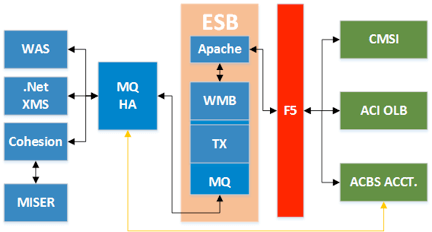
Overview of Findings

The recent reviews conducted by the performing consultant include the infrastructure components indicated in subsection
1. In review of infrastructure best practices for the financial services industry, the following findings were noted:
2.1 Monitoring Optimization for Performance Management & Capacity Planning
Generally speaking, there is significant opportunity to improve the monitoring approach to attain monitoring and management objectives in a way that is considerably more cost-effective than what is presently being practiced.
2.2 Infrastructure Security Strategy Following Pre-Regulatory Standards
Of notice with regard to companies operating in the financial services industry, the security-regulatory environment has changed significantly in the past 10 years. The reported number of breaches in 2012 was astoundingly high at more than 1,000 occurrences. With such voracity of hacking efforts focused on financial services companies, it is imperative that security vulnerabilities be addressed as a priority, and that highest standards and practices are implemented to ensure against such attacks.
The areas identified for improvement are reviewed in the Security subsection below. There are several major components that must be addressed for “Regional Bank A” in the very near future.
2.3 Standards & Best Practices
Within the WebSphere product portfolio, there are several IBM standards and recommendations for installation, configuration and performance tuning for the infrastructure stack. In particular, the standards around the middleware-messaging components (“MQ”) were found to be inconsistent and in need of configuration management. Additionally, Java applications brokered on WebSphere Application Server were found to be running on Java Virtual Machines (“JVM”) that were not configured according to best practices across the board.
This type of situation generally occurs when multiple people are involved with installation and configuration activities, without the guidance and oversight of a middleware architect who would generally ensure that such standards are applied and documented across the topology. More observations and recommendations are shared in the subsections below.
2.4 Software Distribution and Deployment Automation
A review of “Regional Bank A’s” application-release process – i.e., how changes are made to the middleware environment – found the current process to be very informal. Because the environment is small, the implementation of automation at this time will provide significant process improvement and thus positioning “Regional Bank A” for growth. Without this automation, the ongoing cost of development efforts will continue to increase without accompanying levels of development output, due to increasing the complexity of changes and the effort required to manage so many moving parts. This area has been identified as a strategic area of investment for “Regional Bank A” organization and application-growth enablement.

Monitoring Observations

For infrastructures that include an ESB, the standard monitoring approach should encompass the entire end-to-end view of the production technical components at both base server level and application level. This will capture end-to-end business transaction success or failure to complete, providing the ability to identify where specific failures are occurring. The approach should also include the ability to capture relevant data used for planning capacity, to understand and characterizing the behavior of the end-to-end system, and provide information used for middleware performance tuning.
“Regional Bank A’s” monitoring was found to be somewhat component focused with primary focus at the hardware level. Some stats are being captured at all levels, but not in a consistent way in terms of granularity or storage of information that would make the data useful for analysis.
Examples of what is being monitored today include:

  • Real-time usage by PID using TOP
  • Some collection of server stats in the O/S

The areas of suggested improvements include:

  • At Operating-System Level – Capture state and usage of each host (physical or virtual); if running virtually, it is critical that the state is known for the physical mapping to virtual.
  • At Application-Monitor Level – Critically available information depends on knowing the state (up/down/hung) of the application stack.
  • At Transaction-Monitor Level – Service management is dependent on knowing three things:
      Number of transactions completed in the SLA
    1. How many failed?
      How many were delayed?
  • It is also useful to know the service-response times, and stats concerning known bottlenecks such as page-load time, JVM utilization and metrics such as user-response time and invocation stats.
  • Proactive Monitoring – The plan for capacity high/low thresholds needs to be defined and regularly evaluated in response to events and situations where thresholds are exceeded but before an outage has actually occurred.
  • Performance Management & Capacity Planning – For effective cost management of this infrastructure, the initial implementation for the environments may be a subset of full capacity, with the intent to add to the environment as application growth occurs. To accompany this strategy, monitoring data must be captured and stored (using a data warehouse) for trending, tuning, and capacity-planning purposes.
  • “Regional Bank A” is currently not storing monitoring data for any significant length of time. Additionally, a data-maintenance strategy and centralized group to analyze and review performance data on a regular basis should be incorporated into the growth strategy.
  • Security – With recent regulatory changes, all unauthorized access of data must be reported. In order to comply, IT must have a logging strategy and log retention of security events expanded into this tier of infrastructure where application messages are currently passing through and security could be compromised.
Security Observations

The IT Security components involved with this particular infrastructure include:

  • SSL Certificate Management
  • Operating System Level Security
  • Message Security
  • Secure Connection Management
  • General Application Level Security
  • Period of Access.

4.1 SSL Certificate Management Observations
There does not appear to be a centralized authority to govern the way certificates are issued, installed and managed for “Regional Bank A.” General process around certificate management includes: certificate issuance (i.e. purchase and download), installation/configuration by administrator, tracking and renewal of expired certs, secure and re-issuance process to avoid multiple use and/or counterfeit certs.
It was observed that SSL certificates were found in various directories on the server. Moving forward, the recommendation is that certificates be stored immediately upon receipt in a secure Key Store. Certificate files should then be deleted from all other locations and system files.

Message Security Observations
  • MQM group on UNIX should not contain any members other than system IDs
  • All application IDs and people-user IDs should be placed in other group IDs that are specifically configured for their access and usage alone
  • Root should never be a member of the MQM group
  • “Minimum privilege” groups should be created and used for “read” access and configured in MQ Security to the objects required for usage
  • In outsourced IT environments, support groups should have minimum access privileges to prevent outages related to accidental operational support activity
  • Best practice is to use an MQ Change Request ID to access the MQM ID via the Unix “sudo” command for applying any changes or maintenance to MQ objects. This approach is also commonly referred to as granting access using a “Firecall” ID for specific instances when access is actually required while fully logging all activities performed by the ID during the period of access.

4.2 Application Connectivity For Message Queuing
MQ Client connectivity provides access to applications running remotely (on the application servers) with the ability to put and get from MQ queues. During the review, it was suggested that all consumers of the MQ environment should use only a single Client Channel definition. This is not recommended and falls outside of best practice for the following reasons:

  • Lack of application association on each individual connect and disconnect.
  • Security Authorization Records become extremely difficult to manage (for example, identifying who had access when an actual breach occurred).
  • Operational support resolution will require longer and possibly multiple outages to identify root cause of connection issues (applications that are long running).
  • Heightened risk of outages to larger groups of users: When a single consumer encounters a connection issue, there is higher risk that all consumers will be “kicked off” while a channel bounce is done to resolve connectivity issues.

4.3 Application Server Management Observations include:

  • WAS processes running on the servers using Root ID – this is a major security violation in financial-services industry.
  • A “wasadmin” Unix non-expiry ID should be used for the running of all WAS processes.
  • Access to the “wasadmin” ID should be managed operationally, granting a “firecall ID” in the same manner as outlined above for access to the MQM ID for changes and support.

4.4 Middleware Security Using “sudo”
In UNIX, the sudo command is enabled to control access via groups or user ids. Sudo can be focused to just explicit commands and options, and should always have full audit enabled for logging of user activity.

Standards and Best Practices

Throughout all aspects of the review, there appeared to be a disconnect between the “Regional Bank A” teams and the managed-services provider teams that were implementing and providing first-level support for both WAS and MQ. This disconnect can be resolved by:
1. Defining a single set of Standards, Practices and Guidelines issued by “Regional Bank A” that require unilateral adherence by MSP as well as by internal teams;
2. Setting up regular reviews of such policies and standards on a quarterly or project-by-project basis.
Architecture standards should exist in an ESB Architecture Guide, including the security policies for connectivity and access.
Other concerns and best practice observations are as follows:
5.1 WebSphere MQ
The key resource manager for all incoming and outgoing data for the ESB is controlled by the WebSphere MQ Queue Managers. Queue Manager base definitions were not found to be consistent and varied from default settings for what appear to be arbitrary reasons with high levels of inconsistencies across system and application-object configurations. These configurations do require some level of cleanup and maintenance for best practices environment management.
Use of NFS within the Linux/VM environment could be a regular source of compromise regarding high availability. When all other attempts have failed to resolve an NFS issue, the last resort is to bounce the NAS server, which results in immediate outage of all NAS services to all system consumers.
Instead, moving to a direct-storage product like Veritas™ Volume Manager is a cost-effective and reliable practice for ensuring high availability across clusters.
Also, consideration should be given to implementing MQ AMS (Advanced Message Security) to ensure compliance with PCI-DSS standards. This product is used to enforce encryption of messages at rest in the MQ queues to ensure that any and all access to queues will not provide access to readable message content. AMS in conjunction with MQ Security restriction of access will go far in preventing unauthorized access within this tier of the overall application architecture.
5.2 WebSphere Application Server
Several concerns were noted with the WAS implementation supporting “Regional Bank A’s” Java applications:

  • Operating systems not tuned according to minimum IBM standards
  • JVMs not tuned
  • Environment variables not being set
  • Single application/JVM profiles used on the assumption of securing data segregation of application data
Software Configuration Management and Deployment Automation

When changes are introduced into the ESB for software maintenance, when new applications are introduced, or when changes are made to enable better performance or transaction growth, a key area of concern for problem reduction and ongoing stability is to look at how such changes are introduced, tested and validated prior to deployment into the production environment where business transactions are running – the environment where interruption may involve loss of revenue for “Regional Bank A.”
Improvements in the following areas could be explored further for future engagement scope:
6.1 Software Configuration Management
How the application code is stored and version controlled is critical in the practice of software-configuration management. In addition, how the code is migrated to production is an area of extreme scrutiny for most financial-services companies. PCI compliance generally requires the demonstration of secure and formal access control around all source code and code-migration activities to production systems to ensure against introduction of rogue code or malware on financial systems.
Generally speaking, this is an area where best practice is quite mature as related to CMM and pre-Y2K efforts to manage the deployment of massive amounts of code change without business interruption – more from a stability and availability-management perspective.
Since most problems are related to changes made within the environment, most financial-services IT organizations are quite strict and process-oriented, with significant automation around the software-development life cycle (“SDLC”) to ensure against business disruption due to release testing in an environment that is not managed and controlled with the same configuration as production.
At “Regional Bank A,” application deployments are a highly manual effort with some utilization of homegrown scripts, which are subject to human error, inconsistent configurations, and are time-consuming to manage and support.
Key concerns with the current software-distribution strategy include:

  • High degree of error and inconsistencies
  • High labor cost in deployment process
  • High risk of losing skills relating to custom-deployment process and administrator knowledge of each application’s configuration and deployment requirements

Use of automation tools should be considered where:

  • Application changes are packaged into deployment “bundle” with clear associations between the configuration changes and application release dates to each environment
  • Automation tracks all individual components that constitutes a “bundle”
  • Fully automated backend process (including automated back-out of changes)
  • Provides push-button controlled/approved and self-service levels of deployment process
  • Logging of changes for configuration-management auditing
  • Maximizes access control for PCI-DSS compliance

6.2 Deployment Automation
In addition to managing the source code repository itself, management of deployment through deployment automation that encompasses both application changes as well as system changes is considered a best practice.
Though it is conceivable that scripts could be written to accommodate all of the various types of changes to all of the possible WebSphere products and components involved in the “REGIONAL BANK A” ESB configuration, it is not recommended due to the high complexity and amount of time required, which contributes to the overall cost of maintaining homegrown deployment scripts.
This reason alone is perhaps why “REGIONAL BANK A” deployments continue to be manual in nature.
In evaluating the available tools and utilities for automation deployments for WebSphere, consider that deployment of ESB changes are generally of two types:

  • Application Changes – Application changes include new message flows, new application queues, new .ear files or WTX maps, all of which have association with each other with regard to version control with the application bundle.
  • System Changes. System-level changes include the applying of hot fixes, fix packs, and major-release software-version levels. They could also involve environment-configuration settings such as adding a new application ID, group access, database driver, resource-connection pooling configuration and other parameters that enable better performance and throughput. Additionally, WebSphere and Java version levels are somewhat independent of each other, though many times showing critical dependencies with each other in terms of application functionality and thus require configuration management with application bundles.

As a result of the above, it is recommended that “Regional Bank A” consider packaged products that will automate systems as well as application deployments and manage technical dependencies without the use and ongoing maintenance of deployment scripts.
Because of the complexity of the ESB configuration, such products as Rational UDeploy in conjunction with Rational Team Concert are now considered a best-of-breed product combination for managing application configurations and software distribution for complex multi-product ESB customers.
In closing, the review and recommendations above should be considered for initiating infrastructure projects that will address and close the items of key concern. Additionally, the initiation of projects for addressing future automation, performance management and growth of the ESB should also be considered in both the near future and beyond for strategic reasons, as well as for ongoing compliance and growth supportability.
Photo courtesy of Flickr contributor “Info Cash”